

Fear, Courage, and Finding Your Path

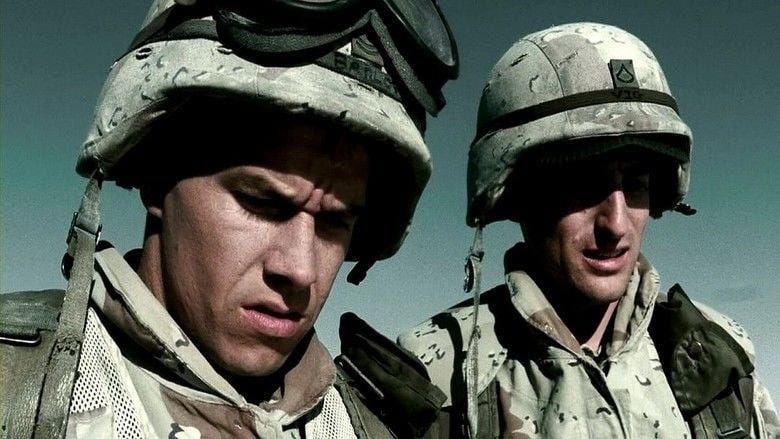
In 1999, George Clooney, Ice Cube, Mark Wahlberg, and Spike Jonze starred in “Three Kings,” a sort of arthouse heist/black comedy movie set during the first Persian Gulf war. This movie has been on my mind lately because I’ve been thinking a lot about fear and courage. There is a part in the movie where George Clooney’s seasoned Army Major Archie Gates provides some encouragement to Spike Jonze’s brilliantly absurd PFC Conrad Vig before a risky plan.
Gates: You’re scared, right?
Vig: Maybe?
Gates: The way this works is, you do the thing you’re scared shitless of, and you get the courage after you do it. Not before you do it.
Vig: That’s a dumbass way to work, should be the other way around.
Gates: I know. That’s the way it works.
This idea of retroactive courage always made sense to me. Doing things that are scary isn’t about ridding yourself of fear. That’s the whole reason why they are scary - they create fear due to uncertainty or the potential for failure. You have to find a way to push through despite the fear. And when you get to the other side, you look back, and what you did looks like courage even if it didn’t feel that way at the time.
The themes of fear and courage are especially relevant to the longstanding human tradition of turning inward to find answers that will help you navigate life beyond yourself and beyond the present moment. This turning inward is scary. It should make you afraid, because it’s the process of going places that you’ve been actively trying to avoid. It’s not the pop-culture introspection of focusing on the breath at the end of your yoga class.
My experience is that this tradition of turning inward has become lost and de-emphasized during the rush of modern life that is built around comfort and convenience. I certainly didn’t feel like I had the time or inclination for introspection while trying to build a career, raise kids, and keep up with the breakneck pace of global developments.
Writing about the Soul Dividend is scary to me, because it is different from anything I’ve done before in my life. But perhaps more terrifying, it’s different than what anyone around me has done. I spent a lot of my life being what I refer to as a “high-functioning economic contributor.” That is to say, from a very young age I learned that if I did well on a test, or got a good grade, or was accepted to a prestigious university, I would make the people around me happy, which would presumably make me happy. That insight shaped many choices I made in my life, not always for the better. It also shaped the kinds of people I ended up being among, creating a feedback loop of sorts where the more I achieved, the more I was surrounded with fellow “high-functioning economic contributors,” and the more it seemed that the thing to do in the world was to keep moving up the ladder.
I remember vividly sitting at a desk at a prestigious job that many of my peers were envious of, that seemed like a slam-dunk ticket to doing “great things.” I was early in my career, working with incredibly accomplished, senior people, but to what end? If I was honest with myself, deep down, I did not believe in the mission of the work. It was not aligned with my core value of working to make things better for everyone. Indeed, it felt more like leveraging the public trust to make a lot of money for a small group of people. Despite the situation being a logical step on that high-achieving path, I felt such intense waves of dread and anxiety. I would take my lunch break outside the office and sit alone on a bench at a nearby park, feeling like something inside me needed to explode out. At the time I didn’t know why, but looking back I understand that it was my inner, intuitive self, my “unconscious,” my “soul” if you will, letting me know I was ignoring needs that were deeper and more fundamental than praise from others or making money. By leaving behind my inner self, the fire with which it burned was bottled up, filling me with an acrid smoke.
And this is where we come back to fear and courage. I found myself on a path that led me away from where I needed to be, and it was hard to know how to get back. Part of it was because leaving the path I was on meant creating tremendous disruption - financial, professional, personal - and I wasn’t sure it was worth doing because I didn’t know what was on the other side. Part of it was that I’d lost contact with my inner self, so even if I was inclined to make a change, I didn’t know where to begin. Put simply, I was afraid of looking inward, and the world was ready to give me plenty of things to do instead.
Last year I left my career and home in Berkeley to move with my family to Copenhagen. The geographical relocation was the easy part (it was not easy). The hard part was (and continues to be) walking away from all the busy-ness, the status, the identity associated with my old life. There is the fear of loss, as well as the fear of the unknown. I feel like Conrad Vig in Three Kings, scared at the precipice of an important action and realizing the courage only comes after you do the thing you’re scared to do. So here I am, still searching to find a way forward that aligns my inner self with my outer, economic self.
But the reason why we do these things is that on the other side, after the fear and uncertainty and doubt, lies a better path. For some periods of my life, I’ve been on this better path as well. Some time after I took the leap of leaving that “prestigious” early career job, I was fortunate to have spent many years working from an early stage at a company called Embark, where I truly believed in the mission, the people, the culture. The path is spectacular in its peacefulness. It is a path that reunites our outward selves with our inward selves, creating the same warmth and contentment as two old friends meeting after a long time apart. This is what I refer to as the Soul Dividend.
The word “dividend” comes from investing and refers to a benefit - usually a cash payment - that is paid out to shareholders of a company when the company is doing well and turning a profit or has surplus cash on hand. Now imagine your inner self, your soul. When this core is aligned with your outer self, you generate value from your attention to the world, your emotional depth, your relationships to others, and your cognitive ability. This is your Soul Dividend - the natural endowment each of us has as thinking, feeling humans.
This is a value immeasurable by dollars and hours and engagements and every other metric we’ve created to quantify our modern world, but accrues a lasting benefit for yourself and those around you that you are able to share it with. Your Soul Dividend benefits all those who have invested in you through love, attention, and care. Cultivating your Soul Dividend enriches your partner, your children, your friends, your colleagues.
So I return to that scene in Three Kings. The path back to your Soul Dividend can be a terrifying one. It can be one that other people do not understand, perhaps even the people closest to you. It can be a lonely path. It can take you to the other side of the world and back. But what else can we do? The courage comes after.