

The Soul Dividend
Why Our Model of the Future is Broken

“Do you have a soul?”
Maybe the last time you thought about this question it was 2am in your dorm room while staring at a blacklight poster on the wall. Maybe you are completely certain of the answer because of the faith you were taught from childhood. Maybe you never seriously considered it at all. The fact is, there are a million different answers, none completely provable as far as I can tell. I’m not here to tell you the definitive truth of the soul. But I’d like to tell you why it’s important to think about.
You have probably had times in your life when you, or let’s say your “soul,” is soaring. When you feel contented, engaged, and present. This may happen when you are unplugged from our devices, perhaps left to your own thoughts while walking through a forest, or engaging in a creative act (no matter how bad we are at it), or playing with your kids at a park.
You have probably also had times in your life when your soul is suffering. When you feel spread thin, hollow, out of place. You might have experienced this late at night after a particularly long session of infinite scroll through social media, even though it seemed like a good idea at the time.
Neither of these states is directly connected with the observable stuff of our lives. Your soul can soar even if you are living through an objectively difficult time. If you have felt this, you have felt the intangible benefit that accrues when you invest in and grow your interior life, despite what’s going on around you. This is what I think of as your soul dividend. Your soul can also be suffering even if you have a picture-perfect life. This is what it is to live without a soul dividend, in deficit, reducing the value of your existence to a fraction of what it could be. You don’t have to be certain about what a soul is to have experienced these feelings.
What Grows Your Soul Dividend
This divergence between, let’s call it “happiness,” and the observable stuff in our lives like financial success, surfaces in polling. In Ipsos’s Global Happiness Index Survey, the top 5 contributors to happiness for people who reported feeling happy in their lives were as follows:1
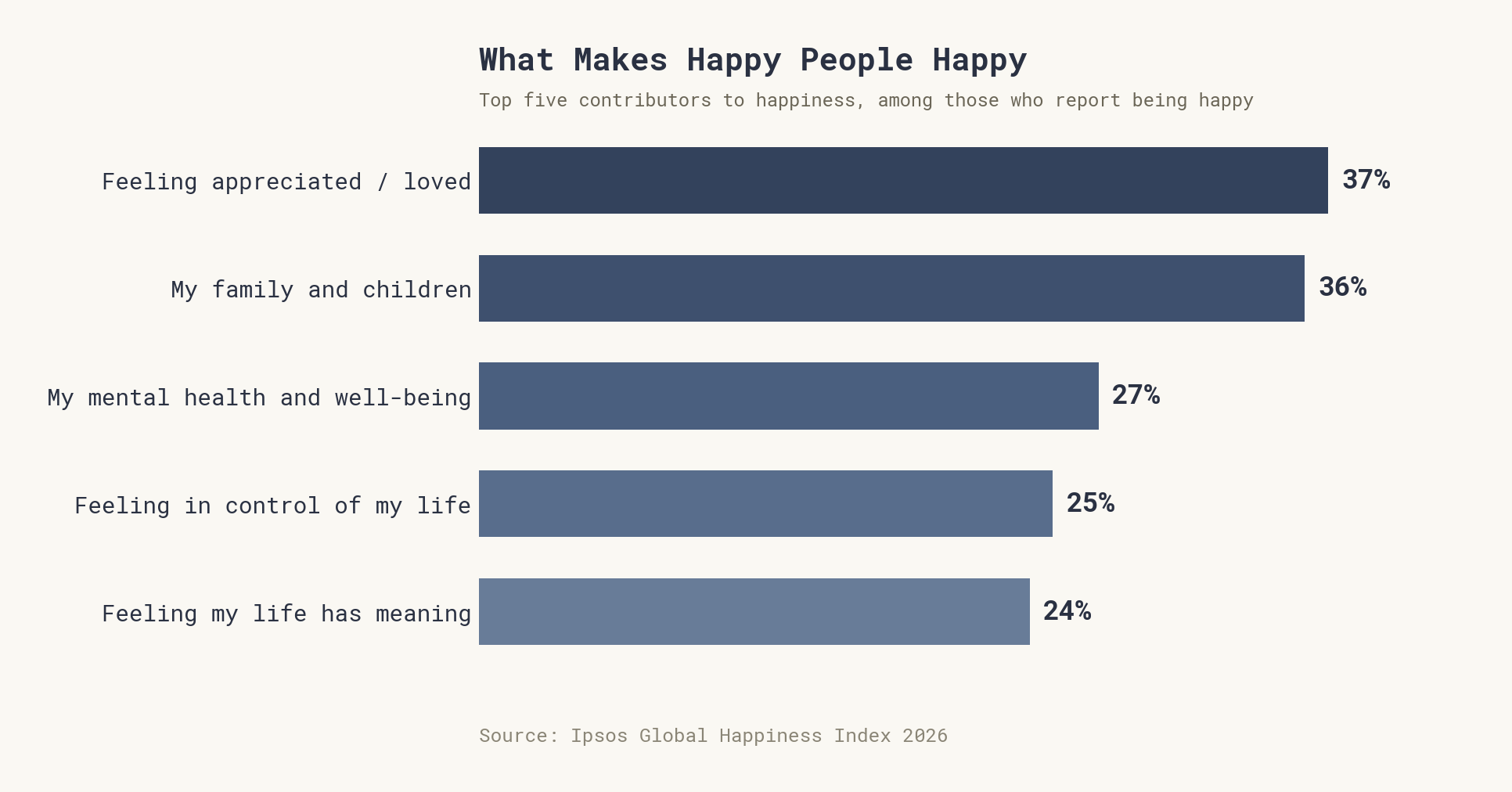
Financial situation was 6th for contributing to happiness. But for people who were unhappy, it was by far the biggest contributor (57%). This supports a Maslow-esque understanding of needs - lack of material well-being can make you miserable, but past a certain point, other non-tangible things create happiness. You need a soul dividend.
These surveys aren’t perfect. I think “happiness” can be an overly broad term that confuses deeper, long-term things like purpose and meaning with shorter-term comfort and convenience. We also aren’t always the best at evaluating short term vs. long term contributors to happiness, or how they interact. A smoker will tell you a cigarette contributes to their happiness even as it’s killing them and undermining their natural ability to cope with life.2 Similarly, social media was self-reported as contributing little to either happiness or unhappiness (3% each way), despite plenty of evidence that it is addictive and can undermine mental health, one of the biggest contributors to both unhappiness (2nd) and happiness (3rd).3 4
Nevertheless, the survey is a valuable if simple exercise to map the biggest perceived contributors of happiness. I don’t think we can ignore that the entire top 5 contributors to happiness are not part of the material metrics we rely on to build our modern world.
A Flaw in the Model
The way we live today, and how we think about the future, doesn’t leave much room for these intangibles. This suggests the model we are using to build our future is fundamentally flawed. Technology and capitalism, while often villainized, are just tools and structures implementing this flawed model. The real problem is upstream. With a better model of the future, both technology and markets could be much better at providing us with fulfilling outcomes, both individually and collectively. To better understand this, let’s consider a lesson from our understanding of the universe.
Precedent for Inferring Your Soul
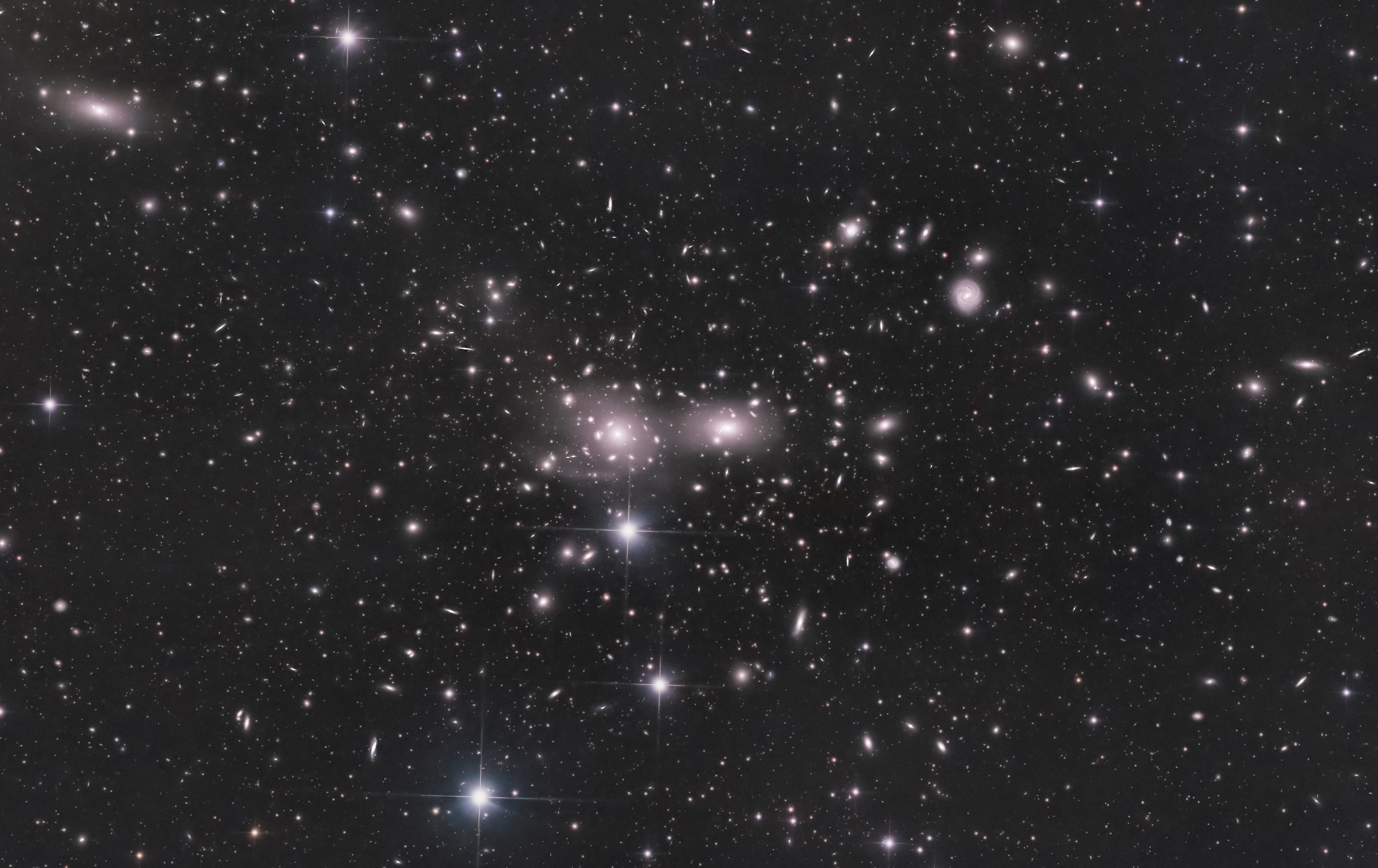
The next time you are out on a clear, dark night, look up and you’ll see a sky full of dazzling stars. Of course, what you can see with your own eyes is just a small fraction of what’s out there. Even with the most advanced scientific equipment developed by humans, we can see only 15% of the matter in our universe. So what else is out there? I’ll tell you what: dark matter. One of the cooler scientific terms in my opinion. Unlike the tiny fraction of matter we can see in the universe, this mystery stuff makes up the other 85% of matter in existence. It’s spread across the universe in strands and globs, intertwined with the small amount of matter we can actually observe. But we can’t see dark matter. We don’t actually know what it is. Its existence is inferred by how the gravity of this unobservable stuff bends light and holds galaxies together that should otherwise fly apart based only on what we can see. For all we know about the universe through direct observation throughout human history, there is more than five times as much invisible matter shaping this tiny observable amount. Bonus points if you read this paragraph in the silky baritone voice of Neil deGrasse Tyson.
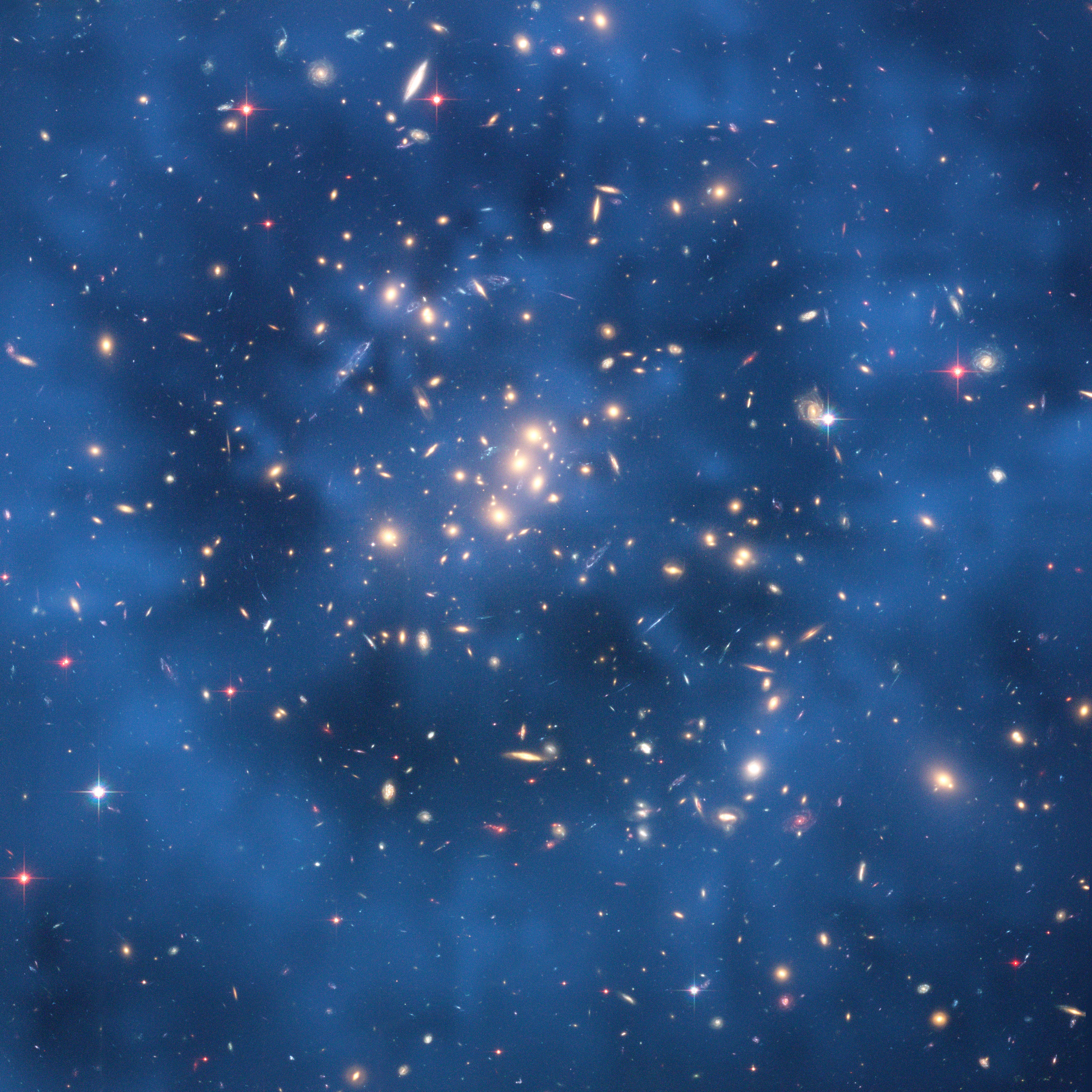
Similar to dark matter, for everything we think we know about ourselves and each other, there is an underlying vastness that we can only infer. In our daily lives, we are the proverbial tip of the iceberg, buoyed by a massiveness hidden under the surface. You feel it most acutely when the things in modern life designed to make you feel one way overwhelm you with the opposite feeling. Social media is supposed to connect us but makes us feel siloed and anxious. Dating apps were supposed to solve the inefficiency of courtship but seem to have broken it, filling us with burnout and disgust for the whole process.5 This undefinable vastness, the “dark matter” in ourselves, is critically important to our individual and collective coherence and meaning, but unobserved and too often unaccounted for in the structures of modern life. This is your soul, your human uniqueness, inferred.
Why Our Current Model Sucks
Let’s extend this analogy between dark matter and your soul just a bit more. Prior to the theory of dark matter, cosmologists had a model of the universe based only on what they could see. But when they became better at observing far away galaxies, their model broke down. It predicted a fast-moving cluster of galaxies should be flying apart, when in reality it was holding together, as if infused with some hidden extra mass. So they inferred the existence of dark matter: stuff we can’t see but whose mass is fundamental to holding the universe together. Accounting for dark matter, even if they don’t understand exactly what it is, made their models better fit with reality.
Today we are living based on a model of our future designed only for what we can see. GDP, income levels, stock prices. The glorious future of AI exponentially boosting productivity metrics while we lounge around on our universal basic income. Meta-provided, customized AI friends to make us less lonely. I have seen how this approach to the future influences the federal government and the tech industry, the two places where I have spent my professional career. Even at their best, neither is a place where you hear a lot of discussion about the soul, meaning of life, or introspection when imagining how to structure that future. Raising your hand in a conference room at Meta or OpenAI or the White House and saying “growth is fine, but have we thought about how this decision will impact people’s souls?” is not a great career strategy. The prevailing model in the United States dictates that innovation and growth should never be held back because they are ends to themselves. There is little appetite for curbing growth to foster our health, our environment, and certainly not our souls.
Maximizing the Soul Dividend (not the stock dividend)
But I would argue it’s past time for more open talk about protecting and cultivating the intangibles of life. Our modern world is filled with tech entrepreneurs, economists, and politicians who believe they have the correct model for a better future. The problem is that lived experience and evidence suggests that this model, rooted only in growth, productivity, and convenience, is incomplete. The soul is the foundational mass this model leaves out, so its outcomes are depression, anxiety, loneliness, and frustration. The current model for our future doesn’t leave room for the unobservable, difficult to measure, impossible to monetize soul that is essential to a meaningful existence. It’s arguably the bulk of what we are. The dissonance between the future we are building and the future we need will continue to grow until we decide it’s time to change.
Fixing this starts with all of us being humble enough to admit that what we can see and measure is only a fraction of what is there. This is a departure from the engineering mindset that everything is known and optimizable. We also need to understand that the people who are good at maximizing the valuations of a business aren’t necessarily good at deciding how we should shape the future - that’s what we invented the democratic process for. Looking exclusively to business leaders to set our future agenda is a sure way of diminishing our soul dividends (usually for someone else’s profit).
For the things that aren’t as easy to measure as GDP, unemployment, user engagement, or annual recurring revenue, we can infer understanding about them by observing how our physical and mental wellbeing is affected by how we live in the world. We know implicitly through our experiences what provides a deep and sustaining sense of contentment and meaning. Accounting for this is the first step to building a more complete model of the future that holds us tightly together with meaning and purpose, instead of casting us aside like galaxies ejected from a rapidly spinning cluster.
Ipsos Happiness Report 2026. March 2026.
Puffing away sadness. Harvard Health, February 24, 2020.
Surgeon General: Why I’m calling for a warning label on social media platforms. The New York Times, June 17, 2024.
Surgeon General Vivek Murthy’s data-supported call for a warning label stating that social media is associated with significant mental health harms for adolescents.
Social media use and its impact on adults’ mental health and well-being: A scoping review. Worldviews on evidence-based nursing, 21(4), 345–394. First published May 12, 2024.
This scoping review states that 78.6% of the 114 studies reviewed revealed that excessive and passive social media use increases depression, anxiety, mood and loneliness.
Burnt out and still single: Susceptibility to dating app burnout over time. New Media & Society, September 2024.
Enjoyed reading this and love the soul / dark matter analogy. Also makes we want to break out the old blacklight posters.