

Below the horizon, part 1
When was the last time you went below the horizon?

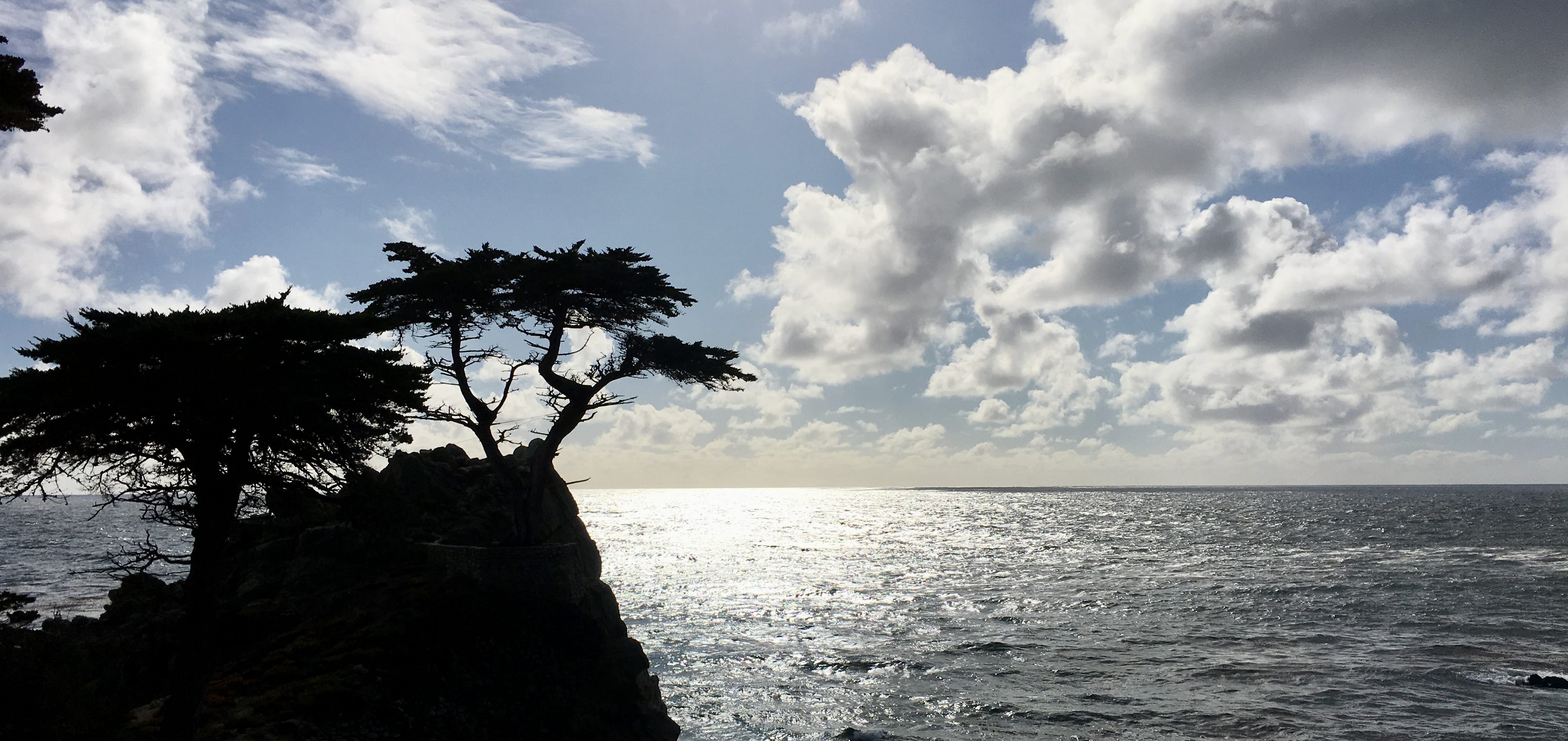
The poet David Whyte speaks often about the importance of the concept of horizon - the line dividing what we can see and what lies unsee beneath. This can be applied to many aspects of life - present and future, conscious and subconscious, reality and imagination. Whyte views horizons as irresistible but frightening invitations to go below and find deeper meaning and understanding.
The centrality of horizons also lends itself to a pretty obvious metaphor: in modern life we close ourselves off from horizons (and the accompanying invitation toward self-knowledge) by spending most of our time enclosed within four walls, starting at screens.
A hero’s journey below the horizon is a theme in many stories from the very earliest, as when Beowulf descends into a blood-stained and boiling lake to defeat Grendel’s mother:
As his words ended
He leaped into the lake, would not wait for anyone’s
Answer; the heaving water covered him
Over. For hours he sank through the waves;1
The first step to benefitting from your soul dividend is to find opportunities to go below your own inner horizon. Ask yourself who you are and listen to what you hear in response. This requires that you stop doing for just a little bit and be content with being. Does this sound a little silly and new age-y? Maybe, but let me share a story that might clarify.
Do it, Do it.
I spent the last decade in leadership roles at tech startups, where decisive and timely action is critical to success. You raise a round of funding, which creates your runway - the length of time you have to show results that will lead to either another round of funding, or ultimately revenue and profitability. You live your life racing against a countdown clock. This demands spending most of your time in doing mode. The famed Silicon Valley “hustle.” You recruit other fellow doers, who have the same passion and urgency to get things done. It’s probably not much different if you work at a big company, or a government agency, or a retail shop, or a school, where job responsibilities, performance reviews, and tight schedules all demand doing as a way of life.
At the same time, I am the parent to two kids. I’m not sure I’ve ever encountered a more doing oriented job than parenting. From the pregnancy-era nesting and birthing classes, to the earliest days of your child’s life awake at all hours monitoring whether or not the diaper is wet, to the gauntlet of nannies, daycares, preschools, schools, doctor’s visits, play dates, family vacations, and everything else. I love my kids deeply. But sometimes kids can feel like they were put on this earth to command you, “DO!” at all hours, every day, probably until you keel over a die. We always say “I’d do anything for my kids.” No one really says “I’d be anything for my kids.” (Maybe we should make that a thing?)
Doing is living life exclusively above the horizon. It is existing in the realm of what we can see and touch and know in obvious and superficial ways. It is how we secure and improve our material existence and take care of the physical needs of our loved ones. It’s what we’ve been conditioned to rely on to solve the problems we see in the world (although it is also the root of many of these problems). It’s how we strive to make our mark on the world. In the end, doing is the way we all fight against our mortality.
Doing vs. Being
In contrast, being is the only way to travel below the horizon. By this, I mean sitting quietly with your thoughts. Listening to your inner voice. Thinking about your own mortality. Considering how your actions impact the world, for better or worse. Thinking about the dream you just woke up from and what it’s trying to tell you. Dreaming at all.
In modern life, there is almost no time, resource, or thought allocated to being. It doesn’t contribute to the economy, or put food on the table, or win you followers on social media. No one can monetize being because it’s an internal activity. So every force in the world outside of your mind is aligned to get you to do, not be.
I recently left an interesting job with a lot of smart people at an exciting startup and moved from the San Francisco Bay Area to Copenhagen. Why would anyone do this? I had a realization that I had structured my life to maximize doing. And the result was that I spent zero time being. I had lost the ability to hear my own voice, and to differentiate it from the voice of a professional doing professional stuff, or the voice of a parent doing parenting stuff. I didn’t dream, literally or figuratively. So I had to make a leap of faith that if I quieted things down a little bit, there would be a unique and valuable voice to be heard below the horizon. That I’d be able to reconnect with a hidden well of creativity and focus and passion that was lost amidst all the doing. That I’d rediscover my soul dividend. And that ultimately this would allow me to be a better parent and a more effective and purpose-driven professional.
What’s the problem with Just Do It?
For some, life lived only above the horizon, defined only by doing, becomes relentless and hollow. You feel like you’re on a treadmill with no off button, desperate to escape. For others, doing can be almost addictive. It becomes your identity, your source of pride, and you can’t imagine living any other way. But either way, you have lost something valuable, the ability to hear your own unique voice and access your passion and dreams that are waiting for you below the horizon.
Additionally, doing mode can turn you into an instrument of someone else’s passion and dreams. Sounds dramatic, right? We all sell our labor in one way or another, turning ourselves into the instrument of another’s priorities, at least during business hours, so what’s the problem? I have met many a software engineer who laments the state of the world from a comfy job at a large tech company, spending their limited time on Earth building a small cog in a massive machine that is broadly responsible for the poor state of the world. If your focus is exclusively on doing - building to the next job, next promotion, next professional challenge - you may not realize all your doing is building something contrary to the well-being of yourself and your community.
Ok, so what now?
So, more being less doing. Go below the horizon. Sure, sounds great, but we can’t all quit our jobs to think deep thoughts, and kids still need to be taken to piano lessons. So how is this remotely helpful?
I hope there’s value in simply acknowledging the tradeoffs between doing and being, and how an imbalance robs us of opportunities to go below our inner horizons. The Soul Dividend is intended to be a forum to explore these themes and develop a framework for achieving a better balance. I don’t think that means we all become monks. We have to make this work with modern life.
I’d encourage you to sit for 10 minutes at some point today and think about how much of your time you spend doing versus being. And where you might make changes to start to shift the balance. This isn’t meditation, this is inward-focused mental exploration.
But, I thought TSD is about technology impacts?
Ah ha! So now we’ve talked about the value of going below the horizon. In a forthcoming part 2, I’ll explore how existing and emerging technologies threaten to put us all in windowless rooms and lock the door, never to see a horizon again, and what we can do to make sure that doesn’t happen. Thank you for reading and stay tuned.
Beowulf, Translated by Burton Raffel (1963)